


Soundcloud
Radio edit
8 minutes
Childhood of the future
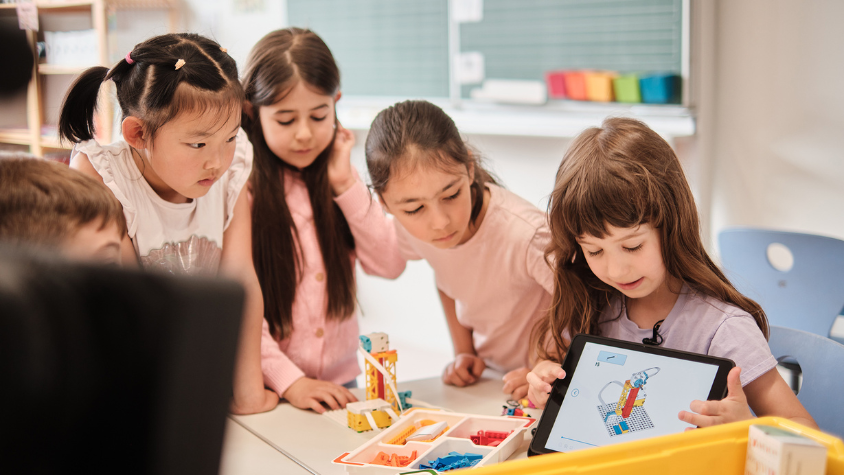
In elementary school kids learn how to build little robots and get in touch with technology early. | Quelle: Michael Damböck
Children are our future and that future is changing fast. From the first email fifty years ago to today’s AI tools, every generation grows up in a different world. So what will childhood look like in ten years?
„Sometimes the teachers can learn from children as well.“
Johannes Kempf, project maneger of „Robotics at Elementary Schools"
Many elementary schools face the challenge of preparing children early on for an increasingly digital world, while also fostering skills such as programming, technical understanding, and problem-solving. This is exactly where the „Robotics in Elementary School” program from the Baden-Württemberg State Media Center comes in: It brings hands-on digital education into the classroom and gives students a playful introduction to robotics and programming. Johannes Kempf is one of the project manegers and knows: „Sometimes the teachers can learn from children as well". But of course, mostly the teachers teach. More insights about the project and how it may affect childhood in the future will be explained in this radio edit. Not just with Johannes Kempf but also with a future mother, Eva Vallaster.
Technology and real experience – these were the two main aspects mentioned by Johannes Kempf and Eva Vallaster. In the end, it’s up to every parent how they want to raise their children. With the new innovations and standards, the world evolves and will set a certain structure. However, no one should be afraid of the changes and take a look at the many new possibilities: with new solutions there will be solved problems and maybe a better way to live – for us and our children.
Auch interessant
Artikel teilen






 Suche
Suche
 Audio
Audio
 Video
Video
