Summer, Sun, Water Scarcity
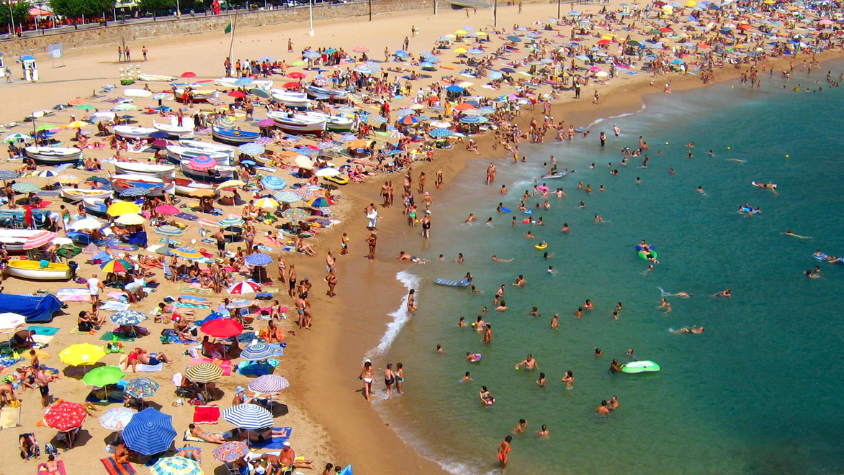

Water scarcity has long been part of the natural environment in the Mediterranean region. What is new, however, is the speed at which it is occurring. Dry periods are becoming more frequent and lasting longer, while temperatures continue to rise. This increases evaporation and makes rainfall more unreliable. Water is therefore not only available less often, but also distributed more unevenly over the course of the year. As pressure on resources grows, it becomes increasingly important to examine the factors driving this development and the role tourism plays in it.
Why water scarcity is increasing in Southern Europe
When millions of travellers arrive at the coasts and cities of Southern Europe during the summer months, additional demand meets resources that are already limited. Heat and prolonged dry periods reduce available water volumes, while consumption rises sharply at the same time. In public debate, this development is frequently attributed to tourism. Yet water scarcity usually arises from the interaction of climatic conditions, infrastructural limitations and political decisions. Tourism contributes to the intensification of shortages during particularly strained periods, but is rarely their original cause.
Groundwater plays a particularly important role. In many regions it is the main reserve when rivers and reservoirs carry little water. Long-term observations, however, show an uneven picture. Analyses of multi-year groundwater data from south-western Europe indicate that declining groundwater levels vary greatly by region and are often more closely linked to usage than to climatic factors. Added to this is the seasonal concentration of demand. In summer, natural scarcity coincides with increased water consumption. Households need more water, agricultural irrigation reaches its peak, and additional demand comes from tourism. In resource-poor, often tourism-oriented regions, this overlap has a particularly strong impact. This overlap is not a marginal local issue. At European level, water scarcity regularly affects large parts of the population and territory, at least during certain quarters of the year, especially in southern regions.
The role tourism plays in water scarcity
In many debates, tourism is seen as the main driver of water scarcity in Southern Europe. This is often justified by the visible and highly concentrated water consumption of visitors. In most affected regions, however, water is already scarce regardless of tourism. Tourism primarily contributes to intensifying existing bottlenecks rather than causing them on its own. Seifeddine Jomaa of the Helmholtz Centre for Environmental Research (UFZ) therefore classifies tourism not as a cause, but as an amplifier.
What is decisive is the temporal concentration. The majority of tourist travel takes place during the summer months. This is precisely when rainfall is low, temperatures are high and water resources are particularly scarce. At the same time, the number of people in tourist regions increases sharply. Places with small resident populations have to meet significantly higher demand within a short period. In these phases, the problem is not so much individual tourists using too much water, but too many tourists being there at the same time. The geographical location of many holiday destinations further exacerbates the situation. Coastal and island regions often have limited water resources and restricted options for balancing supply. Access to larger catchment areas is limited, making groundwater the most important source of supply. When consumption rises sharply on a seasonal basis, these systems come under pressure particularly quickly.
What tourists use water for
The impact of tourism on water scarcity cannot be measured solely by the number of travellers. What matters is how water consumption is structured in everyday tourism and how it differs from that of local households. Surveys show that per-capita consumption by visitors is significantly higher than that of the resident population in many holiday regions.
A substantial share of water use occurs directly in tourist accommodation. This includes showers and toilets, daily cleaning, frequent linen changes, and communal facilities such as pools or wellness areas. As accommodation standards rise, water demand per guest increases markedly. Comparative data from European holiday destinations show that simple accommodation uses significantly less water than mid-range or four-star hotels. Beyond direct consumption, tourist infrastructure also plays an important role. Outdoor facilities and green spaces are regularly irrigated, and there are additional demands from kitchens, laundries and technical installations. Much of this water use remains invisible to guests, yet it has a significant impact on the overall balance.
The temporal concentration of consumption is also striking. While households tend to show relatively stable patterns over the year, tourist water demand reaches its peaks within short timeframes. These often coincide with heatwaves, when water resources are already under particular strain.
Why individual water saving matters, but reaches its limits
In many holiday regions, the first appeal is directed at travellers. Notices encouraging shorter showers or the repeated use of towels have become routine in hotels. Such measures can reduce direct water consumption and raise awareness of the issue. Their overall impact, however, remains limited. The reasons lie in the structural framework of tourism. Travellers have little influence over how water is extracted, stored and distributed. Decisions on infrastructure, pricing, metering systems or the prioritisation of different uses are made at political and administrative levels.
As Alien Spiller, an expert on tourism and sustainable development, explains, individual water saving therefore has clear limits. While personal consumption can be reduced, overall water demand in tourism is often many times higher than local household consumption and arises largely independently of individual behaviour, for example through pools, irrigated gardens, laundries, imported products or technical supply systems.
Individual conservation mainly affects visible consumption. In periods of acute water scarcity, what proves decisive is not so much the behaviour of individual guests as the way water is measured, allocated and regulated. Nevertheless, travellers can make a difference through their choice of accommodation. Community-based or locally run homestays, for example, tend to align more closely with local water consumption patterns and may reduce pressure on regional resources.
More stories on how to make our society future-proof can be found in this section.
Which solutions actually work
Without reliable measurement, transparent rules and clear responsibilities, sustainable management of water resources is not possible. This is emphasised by Dietrich Borchardt of the UFZ.
For Borchardt, management comes first. In many regions, it is still unclear how much groundwater is actually available, how quickly it is replenished and who is withdrawing how much. In some cases, water losses in distribution systems are substantial, which means that improving efficiency can be more effective than expanding supply. Only once these foundations are in place do technological solutions such as desalination or artificial groundwater recharge become meaningful complements rather than first responses.
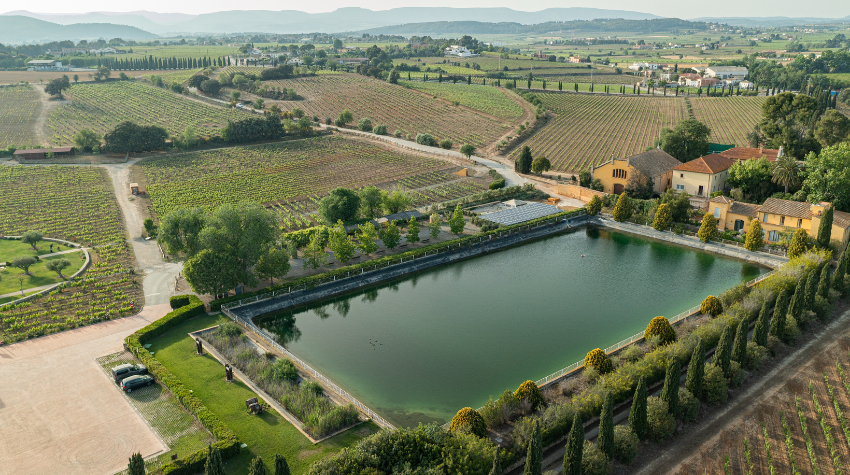
How such principles can be implemented in practice is illustrated by the Familia Torres winery in Catalonia. After several years of severe drought, the company adapted its water management. Rainwater is collected, production water is treated and reused, for example for irrigation and other operational purposes. The aim is to reduce the need for fresh water and use existing resources more efficiently.
Beyond individual examples, water reuse is gaining importance more broadly. Treated wastewater can help reduce demand for fresh water and ease conflicts over use in water-scarce regions. Research projects such as OurMED link questions of reuse with governance approaches and the involvement of local stakeholders. Large-scale technical solutions such as desalination plants are viewed as complementary options, but due to high costs and energy requirements are considered secondary.
Looking ahead, Dietrich Borchardt argues that increasing unpredictability may pose an even greater challenge than absolute scarcity. Longer drought periods, more frequent heatwaves and shifting rainfall patterns are making water systems more vulnerable. In this context, resilience becomes crucial. European water legislation already provides a strong regulatory framework, but the decisive question is whether implementation can keep pace with accelerating climate risks. Accordingly, the European Commission also places the emphasis in its Water Resilience Strategy on management, efficiency and reuse.
Deine Meinung interessiert uns
Yes
No
Auch interessant

Auch interessant




Information Without Boundaries: Why Fact-Checking Has Become a Democratic Imperative





Mehr von edit