Slow News in a Fast-Food World



#futureproofsociety: This essay is part of an international study semester project. More stories on how to make society future-proof can be found in this section. So, keep an eye out for the hashtag #futureproofsociety to learn more about the topic.
In addition, this essay is part of the dossier “Media Overload”, which also includes the following articles:
- News fatigue and overload: brain state emergency – an analysis of news fatigue based on academic research, exploring how the daily flood of news affects audiences, why some feel overwhelmed and turn away from news altogether, and what this means for the future of journalism
- How digital detox movements are helping people to find balance – a personal analysis that reflects on everyday screen overload and examines how international breaks from digital devices can help restore mental balance.
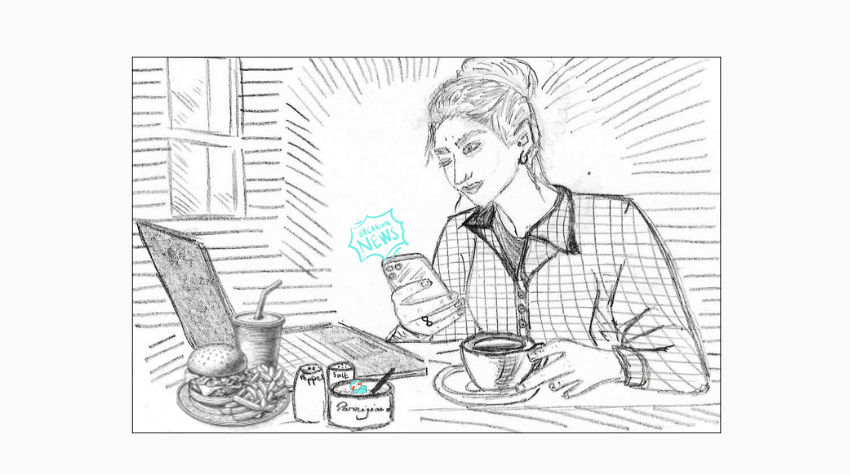
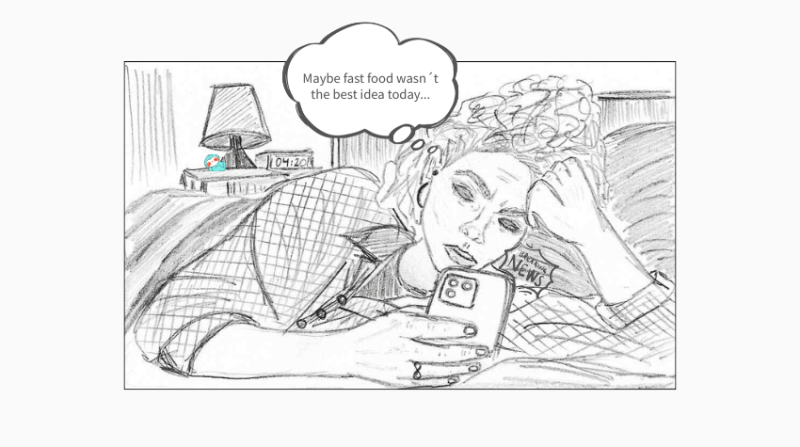
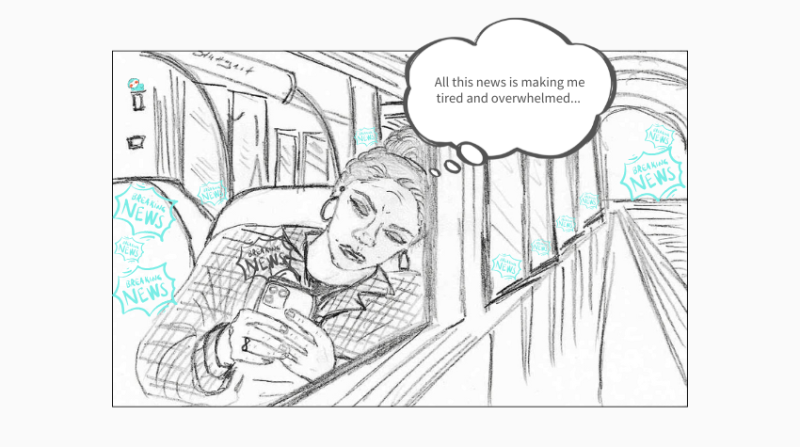
Just popping over to McDonald´s for a quick bite – that phrase perfectly describes how we consume news today. We open an app, start scrolling, and are quickly confronted with a constant deluge of information. Pop-up news and breaking alerts have become the norm – not inherently problematic in themselves. However, this speed changes the rhythm with which we engage with news, and also the rhythm in which information is produced. What becomes clear is that speed itself is not a problem; unfiltered abundance is. This is where critical reflection begins: can Slow News be understood as an alternative without demonizing speed itself?


From Slow Food to Slow News
The Slow Food movement emerged as a response to fast food, advocating more time and care for a basic human need: eating. In this context, academic and former journalist Susan Greenberg transferred the idea of “slow” to journalism. Journalist Peter Laufer later expanded this idea, drawing parallels between mindful eating and mindful news consumption. Because of this acceleration, the idea of Slow News does not appear nostalgic. On the contrary, it seems more relevant than ever.
To explore possible answers, it makes sense to speak with the pioneers of the movement. Thanks to digital communication, connecting across borders has become easy. Both Peter Laufer and Susan Greenberg emphasize that Slow News is less about rejecting speed than about making conscious choices. Laufer´s comparison between news consumption and discount supermarkets exposes how excess is structurally built into the system.
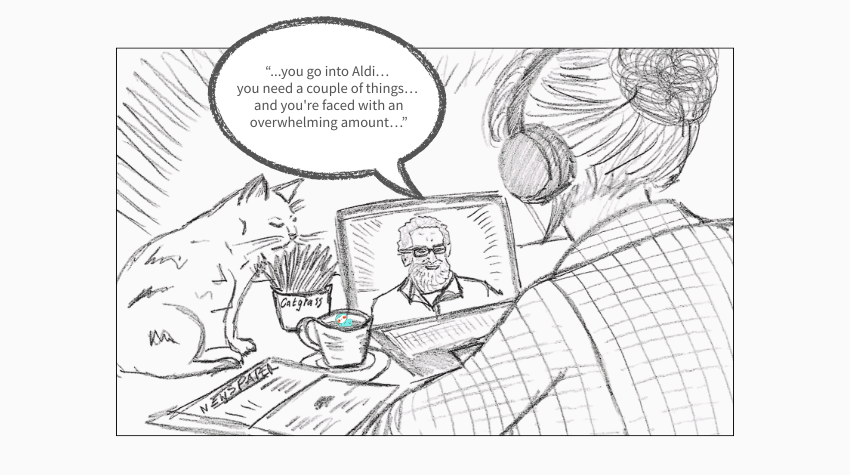
Responsibility, Laufer argues, ultimately lies with the individual navigating a system designed to maximize consumption. The comparison between food and news makes one thing clear: slowing down can be helpful in both spheres. Not because speed itself is the problem, but because overabundance and constant stimulation risk turning audiences into passive recipients. Laufer emphasizes this point when he says: “You are not going to stop people in their big Mercedes going 200 kilometers an hour on the road from Stuttgart to Berlin. You are not going to stop it, but you might want to go in the slow lane yourself”.
Slow News does not mean no news
This is where the Slow News approach becomes particularly relevant. It does not argue against daily reporting, nor does it seek to withhold information from the public. Not everyone experiences fast news as problematic. Ultimately, individuals decide whether they swim with or against the current – but the crucial question is whether they are swept away by it. The central problem is less deliberate falsehood than a systematic lack of depth and context. Journalists and media organizations would benefit from prioritizing precision over quantity. Once again, the food analogy helps. Quality takes time. A risotto does not need weeks of preparation like fermented food or days like baking a three-layer cake, but it does require patience and attention. And while there is nothing inherently wrong with microwave meals, a freshly prepared dish usually offers more depth.
The same comparison can be made between fast food and fast news. There are, of course, situations where speed matters: accidents, catastrophes, terrorism. People have a right to timely information, and relatives need certainty. But journalism should not confuse investigative work with speculative guesswork, nor act as a substitute for emergency services. It should not function as a megaphone for speculation. Its core task remains truth, classification, and responsible reporting – not sensational headlines or gossip journalism. Fast news will remain, Laufer argues. Technology continues to accelerate, and competition remains competition. What can change, however, is the individual decision to choose more deliberately. Yet responsibility cannot lie with the consumer alone; media systems actively shape behavior and attention. Information and research need time. Rush-to-publish journalism inevitably increases the risk of misinformation and shallow framing.
Slow journalism as a measure of quality
Greenberg situates slow journalism within narrative forms such as reportage, and narrative nonfiction, which allow for in-depth research, contextualization or reflection beyond the immediacy of breaking news. In practice, slow journalism is more often encountered in long-form formats such as magazine features, reflective Sunday newspapers (for example The Observer), and dedicated slow-journalism projects. These include magazines like Delayed Gratification as well as platforms such as Tortoise, which deliberately slow down production cycles in order to prioritize explanation, sourcing, and analysis over constant updates. Although Greenberg initially believed the concept to be original, she later realized that similar ideas were emerging elsewhere in cultural discourse. The publication of her article, however, helped to anchor the term and give it broader visibility. Public interest in slow journalism, Greenberg explains, stemmed from the same concerns that fueled the Slow Food movement – the growing sense that fast food was not particularly good for people. At the same time, she stresses that slow journalism was never intended as a rejection of fast news.
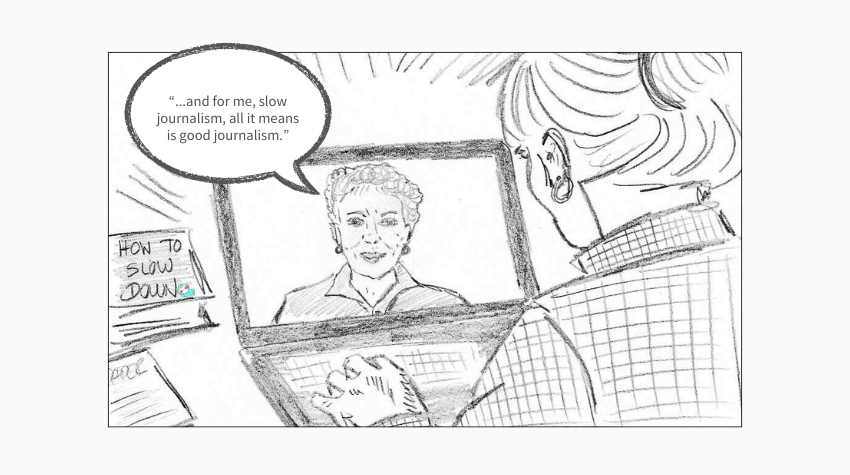
Some news, by its very nature, has to be fast, just as fast food is not inherently problematic, just as fast food can take many forms, including street food. The tension arises not from immediacy, but from the economic structures that reward constant output. From this perspective, fast news will continue to exist because it is expected and largely free, Greenberg notes. More reflective journalism, however, depends on different conditions: time, cultural support, and an audience willing to value depth over acceleration. As she puts it: “You are always going to have fast news because you need to have it, and people expect that to be free […] But there has to be a way for more reflective journalism to survive, for people to be able to make a living providing it, and for audiences to want to read it […] And for me, slow journalism, all it means is good journalism.”
When we think about it, slow news or journalism is not really an alternative to fast news it is more like a way to fix the problems that come with this news flash. Not elitist. Not slow for the sake of slowness. Simply more precise, transparent, and comprehensible. Instead, it articulates journalism through precision, transparency and comprehensibility. Transparency, in particular becomes central: just as consumers read ingredient lists, journalism must make its sources visible. This shows that Slow News is not merely a question of production, but fundamentally one of media literacy.
Slow News as a change of lane, not a prohibition sign
News and information are moving fast these days. This can be too much for people to handle. The thing is, do we all have to go fast all the time? Should there be other ways to do things? Do we really need to drive a Mercedes at 200 kilometers per hour? Maybe we should think about cooking a meal from scratch instead of using instant pasta that is ready in five minutes. Considering the origins of Slow Food in Italy, eating is more than a necessity: it is social and time-consuming. People meet, talk, and stay together. This principle could also be applied to news consumption – not merely consuming, but processing and reflecting. While not everyone suffers from fast news, the growing prevalence of news fatigue suggests a structural issue rather than an individual weakness.
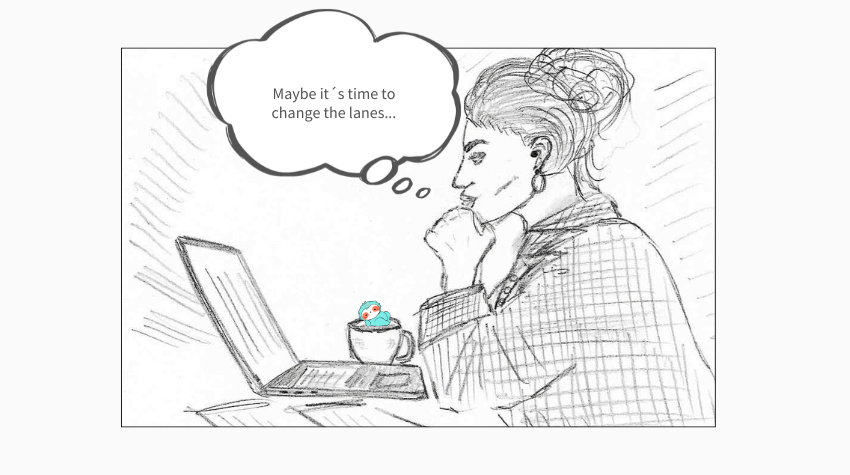
With the rise of AI, this question becomes even more pressing. Technology helps us get work done faster so it also frees up time. Journalists might ask whether that time should be reinvested in deeper research and better storytelling. At the same time, consumers can reflect on whether they truly need constant updates, or whether waiting for analysis, longer documentaries or background reporting might lead to better understanding. Slow News is not universal, but it does help with a big problem that we have with the way we consume news today. For those overwhelmed by endless feeds and constant urgency, it offers orientation instead of overload. It is not a prohibition sign, but a change of lanes – away from acceleration for its own sake, toward journalism that prioritizes understanding over immediacy.
Deine Meinung interessiert uns
Yes.
No.







The Illusion of Perfection: Strategic Control, the Trust Gap, and the Future of AI Influence

Information Without Boundaries: Why Fact-Checking Has Become a Democratic Imperative